
Personal
With personal support, we make sure everyone feels heard and at ease.
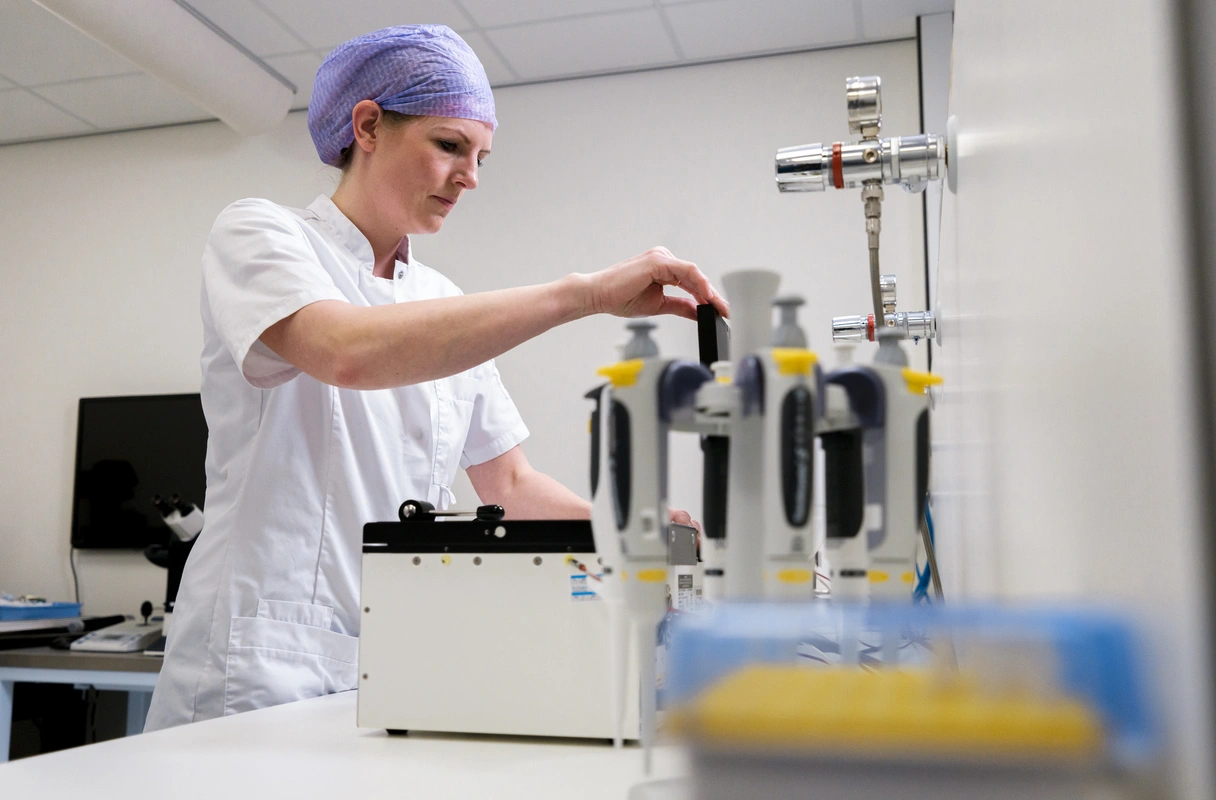
HTDM is an IVF treatment in which an embryo, created with eggs and sperm from the intended parents or donors, is placed in the uterus of a surrogate who carries the pregnancy.
High-tech surrogacy is an advanced medical procedure in which a surrogate carries an embryo that is not genetically related to her. The high-tech form of surrogacy means that IVF (or ICSI) treatment is carried out, combining eggs and sperm from the intended parents or donors.
HTDM offers an innovative solution for couples or individuals who are unable to carry a child themselves for medical or other reasons.
In the absence of a uterus (womb) or if the uterus does not function properly, such as in Asherman's syndrome. (RIF, recurrent implantation failure, is not an indication for high-tech surrogacy.)
When a pregnancy would be life-threatening for the intended mother or would worsen a serious condition she has.
When there is a life-threatening risk to the unborn baby, for example because of repeated premature births.
High-tech surrogacy can be a way for male couples to fulfil their wish to have a child.
Conditions:
If you recognise yourself in the indications and conditions listed, you can register with us for an information consultation. It is important that your team – the surrogate and, if applicable, an egg donor – is complete before the treatment process starts.
A complex and costly process
High-tech surrogacy is a complex and costly process. In addition to the medical treatment, the intended parents, egg donor and surrogate receive extensive psychological and legal support. A positive evaluation is required before the IVF treatment can start.
This process falls under uninsured care, with estimated costs of between €25,000 and €30,000. These costs cover medical, psychological and legal support, as well as administration costs.
Intended parents are eligible for this treatment if they meet one of the following indications:
Male-female couples using their own eggs:
*This age limit has been set in view of the ratio between the chance of pregnancy and the costs (cost-effectiveness).
Male-female couples using an egg donor:
Male couples:
Conditions for the egg donor:
Conditions for the surrogate:
The costs of an HTDM treatment process consist of the appointments with specialists, the treatment, the medication and any storage costs for your own or donor material and/or embryos. For an indication of the costs, please consult our list of fees.
High-tech surrogacy is a complex and costly process and is not covered by insured care. In addition to the medical treatment, the intended parents, egg donor and surrogate receive extensive psychological and legal support. A positive evaluation is required before the IVF treatment can start.
Please bear in mind possible additional costs (uninsured care):
Counselling within the surrogacy process is provided by an external healthcare psychologist (GZ-psycholoog). They screen the intended parents, the egg donor (if applicable) and the surrogate in individual and joint sessions. In this way, we safeguard the quality of care and clarify expectations and possible risks, so that everyone can make a well-considered choice. There is also room for aftercare and extra support during and after the process. We work together with ZED (Claudia Klatt) and Onspsychologie (Marin).
The success rates of HTDM depend on various factors.
²Not all clinical pregnancies lead to an ongoing pregnancy, as some end early in a miscarriage.
³The statistics shown are averages per transfer. No rights can be derived from them.
You can use this form to register as intended parents, egg donor or surrogate.