
0 days
Average waiting time until intake

Intrauterine insemination (IUI), also known as artificial insemination, is a fertility treatment that increases the chance of fertilisation. Prepared sperm cells are placed directly into the uterus through a thin tube (catheter).
Intrauterine insemination (IUI) is a fertility treatment in which sperm cells are placed directly into the uterus through a thin tube (catheter) around the time of ovulation. Before the insemination, the most motile sperm cells are selected and prepared in the laboratory. IUI treatment increases the chance of fertilisation thanks to the precise timing, the preparation of the sperm cells and their placement into the uterus.
You have had unprotected intercourse for a year but have not become pregnant. Or the fertility assessment (OFO) shows that your chance of a spontaneous pregnancy is lower than 30%. Or self-insemination has not led to a pregnancy.
The quality (count and/or motility) in the semen analysis is lower than normal, but the prepared sample shows sufficient motile sperm cells.
Vaginal intercourse is not possible for you.
You are using donor sperm; we also call this IUI-D or KID treatment.

Based on the results of the initial fertility assessment , you will discuss with your doctor whether to start in a natural or a stimulated cycle.
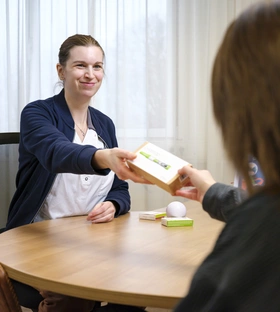
To perform the insemination at the right moment, we monitor your cycle closely.
Read more about how the medication works.

Good timing of the insemination is crucial for increasing the chance of fertilisation. This chance is highest when the IUI is performed around the time of ovulation.
Follicle monitoring
Using ultrasound scans, we measure the number and size of the follicles and the thickness of the endometrium (lining of the uterus), after which we schedule a follow-up scan or the insemination.
Triggering ovulation with hCG medication
When a follicle is large enough, we trigger ovulation with an hCG injection so that we can time the insemination as precisely as possible. Read more about medication.

On the day of the insemination, the intended father hands in the semen sample at the clinic. For optimal sperm quality, it is important not to ejaculate in the two days before the insemination, but also not to abstain for too long, as that is not good for sperm quality either. The sperm is then prepared in the laboratory¹, so that the well-moving sperm cells are separated from the less motile ones.
¹Nij Clinics Gorinchem works together with Result Lab; Elsendorp & Wolvega have their own laboratory.
IUI with donor sperm
If a male partner has reduced sperm quality, or if you do not have a male partner, KID treatment will be carried out.
Preparation
On the day of the insemination, it is important not to use any fragranced products, such as deodorant, perfume, aftershave or body lotion, because of the substances in them that are harmful to eggs, sperm and embryos. Please also make sure you have a full bladder.
During the insemination
Before the insemination, we check together that the correct semen sample is present. You then sit in a gynaecological chair and we insert a speculum to position your cervix. We place the prepared sperm into your uterus through a thin catheter. The procedure takes about five minutes and is generally not painful. The insemination is performed by a fertility nurse, fertility doctor or gynaecologist.
After the insemination
You can get up straight away after the insemination, as scientific research shows that lying down afterwards does not affect the chance of pregnancy. Some women need to start additional medication the day after the insemination. After the insemination, you can go to the toilet, have sexual intercourse and carry on with your daily activities as normal. It is normal to experience some cramping or light bleeding on the day of the IUI.

15 days after the IUI, you do a pregnancy test at home using morning urine. An exciting moment! Please let us know the result as soon as you have it.
Positive test – Pregnant
Congratulations! If the test is positive, we schedule an ultrasound scan at around 7 to 8 weeks of pregnancy. If the scan shows a well-growing embryo with a beating heart in your uterus, the treatment has been successful. We then refer you to a midwife of your choice for further pregnancy care. In some cases, a referral to a gynaecologist is needed. We would love to hear how your pregnancy and the birth go. Read more.
Negative test – Not pregnant
A negative test, scan or the start of your period is of course disappointing. Together with the doctor, you will discuss the next steps. If your period starts, please contact us on the first day of your period to discuss the next step. This may be a new IUI treatment or an evaluation appointment with a doctor. If you are unsure about your situation, especially if things are going differently than usual, please get in touch with us. This applies in particular to stopping or restarting medication.
The chance of pregnancy is largely determined by the woman's age and lifestyle and the quality of the sperm cells used for insemination. Naturally, at least one of the woman's fallopian tubes must be functioning normally.
²Not all clinical pregnancies lead to an ongoing pregnancy, as some end early in a miscarriage.
³The statistics shown are averages per insemination. No rights can be derived from them.
Source: Nij Clinics, national statistics.
The costs of IUI treatment consist of the appointments with specialists, the treatment and the medication.
For an indication of the costs, please consult our list of fees .
If there is a medical indication, health insurers usually cover a number of treatments. Please check the conditions with your health insurer.
If you are single or in a lesbian relationship and there is no medical indication for donor insemination, your treatment is funded through the national subsidy scheme. If there is a medical indication (which can be established after the intake), the treatment is claimed from your health insurer.

IUI stands for intrauterine insemination, a fertility treatment in which sperm cells are placed directly into the uterus around the time of ovulation using a thin tube (catheter).
The insemination itself is a simple and often painless procedure. The only part that may feel uncomfortable is the insertion of a speculum, which allows us to see your cervix. You will feel little or nothing of the thin catheter being inserted and the sperm being introduced.
Intrauterine insemination (IUI) is a fertility treatment in which sperm cells are placed directly into the uterus around the time of ovulation using a thin tube. This increases the chance of fertilisation, because the sperm cells are brought closer to the egg. Before the insemination, the most motile sperm cells are selected and prepared in the laboratory.
The insemination itself is a simple and often painless procedure. The only part that may feel uncomfortable is the insertion of a speculum, which allows us to see your cervix. You will feel little or nothing of the thin catheter being inserted and the sperm being introduced.
We recommend that the male partner does not have intercourse for 48 hours before producing the sample (on the day of the IUI). This is to achieve the intended sperm quality. After the IUI, there are no restrictions on intercourse.
15 days after the IUI, you do a pregnancy test at home using morning urine. Exciting! Let us know the result as soon as you have it.
