
0 days
Average waiting time until intake

Ovulation induction is a treatment used for women who have difficulty becoming pregnant because their cycle is irregular or absent altogether.
Ovulation induction literally means triggering ovulation. This is done with medication in the form of tablets or injections. The aim is to allow one follicle to mature and release an egg. During the treatment, we use ultrasound scans to check whether and how the follicles are growing. If no follicles or too many follicles are growing, the treatment can be adjusted or temporarily stopped. If a follicle is growing well, we determine the time of ovulation, after which intercourse or insemination can take place.
You have had unprotected intercourse for a year but have not become pregnant.
When there is irregular ovulation or absent ovulation (anovulation) and/or irregular or absent periods.
When you have PCOS. Read more about PCOShere.
Abnormal hormone levels can affect your cycle.
Ovulation induction treatment takes place in several steps and is closely supervised by one of our fertility specialists. Below you can read step by step how it works:

Based on the results of the initial fertility assessment , you and your doctor will decide on the best next step to increase your chances of pregnancy.
For women with an irregular cycle, we first look further into the possible cause of the irregular or absent cycle. If being overweight plays a role, the doctor will advise you to lose weight first. In some cases, weight loss can make the menstrual cycle more regular again by itself, allowing ovulation to start as well.
In some cases, natural ovulation then becomes possible again without the need for medication. Losing weight also increases the chance of a healthy pregnancy.
Starting treatment
Treatment usually starts on the third day of your menstrual cycle. As soon as your period starts, please phone us. Sometimes it is necessary to induce a period with medication first. Does the first day of your cycle fall at the weekend? Then email us or call us on Monday morning – there is no need to use the emergency line.
Medication
Depending on your situation, you will receive medication in the form of:
The aim of this medication is to stimulate the ovaries so that one follicle matures. Sometimes more than one follicle grows. We monitor this closely using ultrasound.
Read more about the medicationhere.
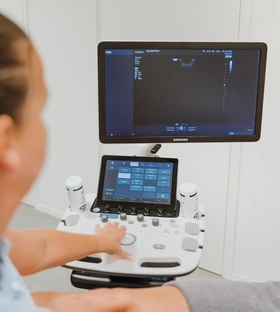
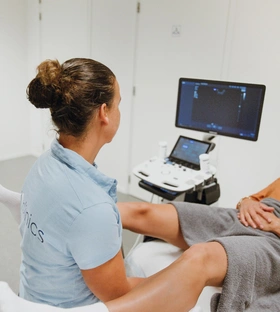
During the treatment cycle, we use transvaginal ultrasound scans to monitor closely whether the ovaries are responding to the medication. The first scan usually takes place around day 10 of the cycle. We check whether one or more follicles are growing and whether the endometrium is building up properly.
These checks help us tailor the treatment optimally to your body.

When the scan shows that a follicle is large enough (usually around 18–20 mm, sometimes slightly larger due to the medication), we determine the right moment for ovulation. This can be done in two ways:
The medication is prescribed via the Serphaportal, where you can also find the package leaflets and clear injection instructions .
Around the time of ovulation, we advise you on the best time to have intercourse. In some cases, an insemination takes place (IUI).

Sometimes medication is prescribed after ovulation to support the endometrium, such as progesterone in the form of vaginal capsules. We only do this when there is an indication for it.

About two weeks after ovulation, you take a pregnancy test using your first morning urine. An exciting moment! Let us know the result as soon as you have it.
Positive test – Pregnant
Congratulations! If your test is positive, we will schedule an ultrasound scan at around 7 to 8 weeks of pregnancy. If the scan shows a well-growing embryo with a beating heart in your womb, the treatment has been successful. We will then refer you to a midwife of your choice for the rest of your pregnancy care. In some cases, a referral to a gynaecologist is needed. We would love to hear how your pregnancy and the birth go. Read more.
Negative test – Not pregnant
A negative test, a scan showing no pregnancy or the start of your period is, of course, disappointing. You will discuss the next steps together with the doctor. When your period starts, please contact us on the first day of your period to start a new IUI treatment. If you are not sure whether it is your period, please check with us, especially if you are taking medication for the treatment.
The costs of ovulation induction consist of appointments with specialists, ultrasound scans and medication.
For an indication of the costs, please see our list of fees.
If there is a medical indication, health insurers usually cover a number of treatments. Please check the conditions with your health insurer.
Register for an intake consultation.
The treatment itself is generally not painful. Hormone injections can sometimes cause skin irritation at the injection site, and some patients experience mild side effects such as bloating or mood swings.
This varies from person to person. Your treating doctor will discuss the number of treatments in the treatment plan. If these attempts are unsuccessful, a follow-up treatment such as IUI may be considered.
After a positive ovulation test, ovulation usually takes place within 24 to 36 hours, sometimes up to 48 hours. The LH surge itself usually lasts 1 to 2 days. So you still have some time – there is no need to rush.
Having intercourse around the LH surge
We recommend having intercourse at least twice around your positive ovulation test. For example: on the day of the positive ovulation test and again 24–36 hours later. When you see the test line getting stronger, you can also have intercourse one to two days before the expected positive test.

