

Blogs
23-09-2026
If you smoke as a woman, your chances of pregnancy are halved. For a long time, we thought the egg was reasonably well protected from outside influences. We now know that the lining of the uterus, the egg and implantation are also significantly affected by nicotine. Smoking also accelerates the loss of fertility in women and can bring the menopause forward by one to four years. This earlier menopause can mean that you are more likely to remain childless.
If a pregnancy does occur, smoking increases the risk of miscarriage and ectopic pregnancy. So stop.
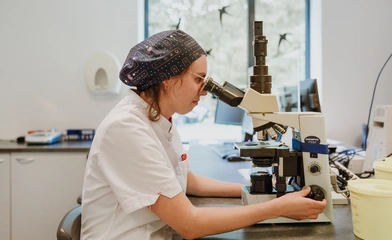
It has been known for years that smoking is bad for sperm cells. Thanks to careful recording of all treatments, we can see that smoking by the man also almost halves the chance of pregnancy. Smoking affects the volume, concentration, motility and morphology of the sperm cells. With new techniques, damage to the sperm cells can be seen through a special staining of the sperm cells.
We see an increase in DNA damage to the sperm cells, resulting in a lower chance of pregnancy and a higher risk of miscarriage. The damage can even mean that pregnancy does not occur at all. The damage may also be passed on to your child, causing problems for them. In addition, smoking increases the risk of a varicose vein in the testicle (varicocele), which also reduces sperm quality. So stop.
Besides halving the chance of pregnancy, smoking during pregnancy can also be disastrous. The problem with smoking is that it is a so-called silent killer. For a very long time you have no symptoms and you may not feel any of the consequences. You think everyone is exaggerating the dangers, but in the meantime many systems in the body are being damaged. Genetic material can be damaged, so that you pass this affected material on to your child. The consequences for your baby can vary, but asthma, allergies and cardiovascular disease are the best-known effects. There are also reports of higher risks of miscarriage, placental abnormalities, fetal growth restriction, premature birth, stillbirth and early neonatal death.
Don't. Smoking a little is enough to cause damage and reduce your chances of pregnancy.
The harmful effects of “passive smoking” (people who do not smoke spending time in spaces where others smoke) have now been firmly established. After just 30 minutes in a smoky room, a non-smoker experiences raised carbon monoxide levels in the blood, a faster heart rate and higher blood pressure. The effects of passive smoking mean reduced protection against eye, nose and throat irritation and damage to the small airways in the lungs.
To put it in perspective: 40 hours a week of passive smoking is equivalent to 5 cigarettes a day!
Research and the recording of treatments show that around six months after stopping smoking, the chances of pregnancy are equal to those of couples who have never smoked. The quality of eggs and sperm cells improves. A woman's AMH level may improve. So even after years of smoking, it is definitely worth stopping. Not all the nicotine will have left your body by then, but you will have doubled your chances of pregnancy.
The answer to this question seems obvious: don't light another cigarette. In practice, however, it is harder than that. There are various ways to help you stop: patches, chewing gum, acupuncture and so on. Sometimes you can no longer see the wood for the trees. Your GP can often give you some advice, but there are also (online) coaches who look at the best way for you to stop. Plenty of help is available, but ultimately you have to do it yourself.
Need help to stop smoking? Talk to one of our staff: we are here for you and your wish to have a child!
← back to news overview Need help to stop smoking?


